You step off a long flight and notice your ankles have puffed up over your shoes. Or you’re a few days into surgical recovery and one area feels tight, heavy, and swollen. Swelling can catch anyone by surprise, and it’s natural to wonder whether what you’re experiencing is normal or something that deserves attention.
Here’s the important truth: not all swelling is the same. Temporary fluid buildup can sometimes accompany prolonged sitting or the healing process, but the circumstances and accompanying symptoms matter enormously. Understanding the difference helps you know when to simply rest and elevate, when compression might help, and when it’s time to call your healthcare provider.
In this article, you’ll discover:
- Why our bodies swell after travel and surgery
- How graduated compression may help certain types of swelling
- The warning signs that deserve medical attention
- Why proper fitting matters as much as compression level
- How to manage swelling safely during travel and recovery
At Pretty In Pink Boutique, our certified compression fitters help patients find properly fitted, medically appropriate compression solutions but compression is only one tool, and it’s always most effective when it’s right for your individual situation.
Why Does Swelling Occur?
What Is Edema?
Edema is simply fluid accumulating in body tissues. You might notice puffiness, a feeling of tightness or heaviness, shoes or rings fitting more snugly, or visible differences in the size of an arm, leg, foot, or ankle. These sensations are your body’s way of signaling that fluid isn’t moving through the area as freely as usual.
Your Circulatory and Lymphatic Systems Matter
Your veins work to return blood toward your heart, while your lymphatic system helps move fluid and waste through your body. When either system is disrupted whether by prolonged inactivity or by surgery involving lymph nodes fluid can build up. Surgery that affects lymphatic vessels can sometimes contribute to lymphedema, a chronic form of swelling that requires specialized management.
Swelling After Travel: What May Be Happening?
Why Long Trips Can Leave Your Legs and Feet Swollen
When you sit for extended periods, your legs lose the normal movement that helps pump blood and fluid upward. Without regular calf-muscle activity, blood and fluid are more likely to pool in your lower extremities. This applies to flights, road trips, train travel, and any situation involving several hours of sitting.
The CDC notes that prolonged sitting during long-distance travel can interfere with blood flow in the legs, contributing to venous stasis and increasing the risk of venous thromboembolism (VTE). This is why regular movement and calf-muscle exercises are recommended during long trips.
Simple Ways to Keep Moving While Traveling
You can encourage healthy circulation with a few easy habits: walk periodically when it’s safe to do so, take movement breaks during road trips, flex and point your ankles, raise and lower your heels and toes, and contract and release your calf muscles while seated. The CDC recommends frequent leg movement and periodically getting up during long journeys.
Can Compression Help With Travel-Related Swelling?
How Graduated Compression Works
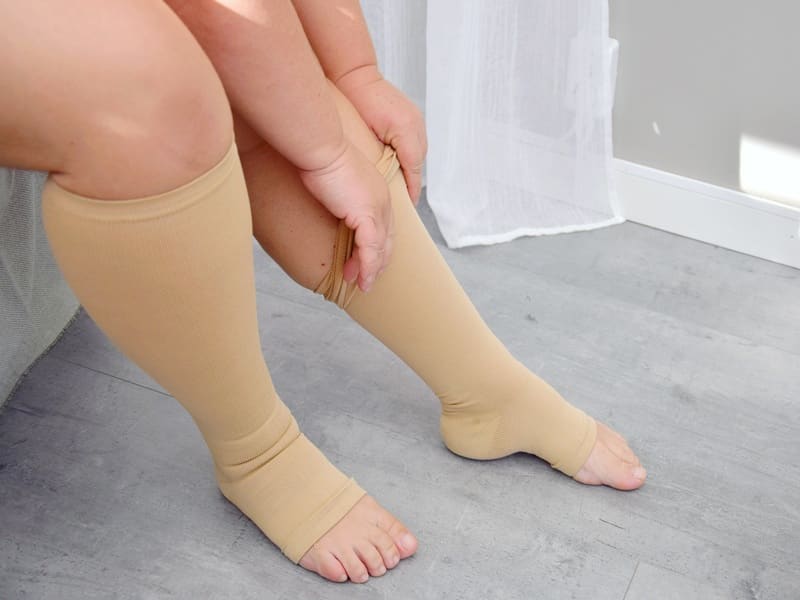
Graduated compression garments apply controlled pressure, generally providing more pressure lower on the leg and less farther up. This design can help support the return of venous blood and discourage fluid from pooling in your lower legs and feet.
Should Everyone Wear Compression When Traveling?
Not necessarily. Some people benefit more than others. If you have additional blood-clot risk factors such as a history of clots, recent surgery, or cancer treatment—you should discuss preventive measures, including compression stockings, with your healthcare provider before traveling. Compression level, garment style, and fit should always be appropriate for the individual, so compression socks aren’t a one-size-fits-all solution.
Planning a long trip? A properly fitted garment can make a significant difference in both comfort and effectiveness.
Swelling After Surgery: What’s Normal?
Some Swelling Can Be Part of Recovery
Surgery causes tissue trauma, and postoperative swelling can be a normal part of healing. However, the amount, location, and expected duration depend heavily on the procedure—which is why following your surgeon’s individual recovery instructions is so important. Pay attention to whether your swelling is gradually improving, staying the same, or suddenly worsening.
Surgery Can Also Affect Lymphatic Drainage
This is especially relevant for our community. Breast cancer surgery, lymph-node removal, pelvic or gynecologic cancer surgery, melanoma surgery, and other procedures affecting lymphatic vessels can interfere with lymphatic drainage. Swelling, along with feelings of heaviness or tightness, may be an early sign of lymphedema.
When Can Compression Help After Surgery?
Follow Your Medical Team’s Recommendations
Depending on your surgery and medical condition, your provider might recommend compression socks and stockings, compression sleeves, compression bras, abdominal or torso garments, or other specialty compression garments. Postoperative compression recommendations always depend on the specific surgery and your individual health, so your medical team’s guidance comes first.
Fit Is Just as Important as Compression Level
A garment that’s too loose may not provide the intended benefit, while one that’s too tight or incorrectly fitted can cause discomfort or skin problems. Because swelling can change your limb dimensions, reassessment is sometimes necessary. Vascular guidance from the NHS specifically advises remeasurement when limb size or shape changes, since an overly tight garment may damage the skin while an overly loose one becomes ineffective.
Normal Swelling or Something More Serious?
This is the most important section of this article. While much swelling is harmless, some warrants prompt attention.
Signs That Deserve a Call to Your Healthcare Provider
Reach out to your provider for new or unexpectedly increasing swelling, significant swelling affecting only one arm or leg, persistent or worsening swelling, new heaviness or tightness near an area where lymph nodes were removed or treated, or skin changes and increasing discomfort. The National Cancer Institute recommends contacting a healthcare provider when new signs of lymphedema develop.
Know the Warning Signs of a Possible Blood Clot
Swelling in one leg or arm, unexplained pain or tenderness, warm skin, and redness or discoloration can be symptoms of deep vein thrombosis (DVT), which warrants prompt medical evaluation.
Get Medical Help Immediately These can be signs of a pulmonary embolism and require immediate medical care:
- Difficulty breathing
- Chest pain
- Coughing up blood
- Fainting or severe lightheadedness
- Rapid or abnormal heartbeat accompanying other symptoms
Choosing the Right Compression Garment
Compression Isn’t One-Size-Fits-All
The right garment depends on many variables: compression strength, knee-high versus thigh-high, sleeve or gauntlet, circular-knit versus flat-knit construction, ready-to-wear versus custom, and daytime versus specialized nighttime garments. Each choice affects comfort and effectiveness.
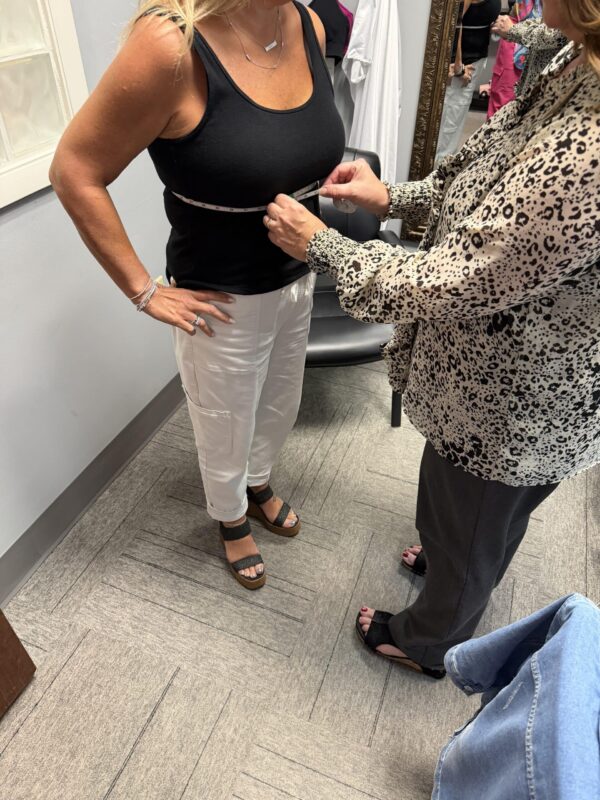
Why Professional Measurement Matters
At Pretty In Pink Boutique, our high-touch approach means taking correct measurements, identifying the right garment style, helping you understand application and removal, rechecking fit when your body or swelling changes, and improving comfort so you’re more likely to wear your garment as directed.
When Not to Self-Prescribe Compression
Certain medical conditions, including impaired arterial circulation and suspected acute DVT require medical assessment before compression is used. When in doubt, always ask your provider first.
Tips for Managing Swelling During Travel or Recovery
- Keep moving when your medical provider says activity is safe
- Change positions regularly during long trips
- Perform gentle ankle and calf movements while seated
- Elevate swollen legs when appropriate
- Wear prescribed compression correctly
- Check your skin and garment fit regularly
- Stay alert for new or one-sided swelling
- Contact your healthcare provider if symptoms unexpectedly worsen
Don’t Guess When It Comes to Compression
Swelling after travel or surgery can have many causes. Compression may be helpful, but the right garment, compression level, and fit all matter—and some swelling deserves medical evaluation rather than self-treatment. If you’re experiencing unexplained or concerning swelling, please seek medical advice first.
If you’ve been advised to use compression, we’re here to help you find a comfortable, properly fitted solution. Our experienced team provides compassionate, individualized assistance in selecting, measuring, fitting, and learning to use compression garments.
Need help finding compression that fits your body and your needs? Schedule a compression fitting with Pretty In Pink Boutique, or call or text us at (615) 777-7465. You can also email info@prettyinpinkboutique.com.
This article is for educational purposes only and is not a substitute for individual medical advice. Always consult your healthcare provider about your specific symptoms and before beginning compression therapy.
Together, we’re stronger.
Frequently Asked Questions
Is it normal for my ankles to swell after flying?
Some people experience swelling after prolonged sitting. However, significant, one-sided, painful, red, or warm swelling should be evaluated by a healthcare provider.
Should I wear compression socks on a plane?
It depends on your individual risk factors. If you have a history of clots, recent surgery, cancer treatment, or other risk factors, ask a healthcare professional before your trip.
How soon after surgery can I wear compression garments?
There’s no universal answer, always follow your surgeon or treating provider’s specific instructions.
How do I know what compression level I need?
Medical recommendations and professional fitting are always preferable to guessing, since the right level depends on your condition.
What if my compression garment suddenly feels too tight?
A change in swelling may have changed the fit. Contact your fitter or medical team rather than tolerating significant discomfort.
Can swelling after cancer surgery be lymphedema?
Yes. Lymphatic damage from some cancer surgeries or radiation can cause lymphedema, and early changes can include swelling, heaviness, fullness, or tightness.
Pretty In Pink Boutique
STE 220,
Email: info@prettyinpinkboutique.com
| Sunday | Closed |
| Monday | 8:00 AM - 5:00 PM |
| Tuesday | 8:00 AM - 5:00 PM |
| Wednesday | 8:00 AM - 5:00 PM |
| Thursday | 8:00 AM - 5:00 PM |
| Friday | 8:00 AM - 5:00 PM |
| Saturday | Closed |