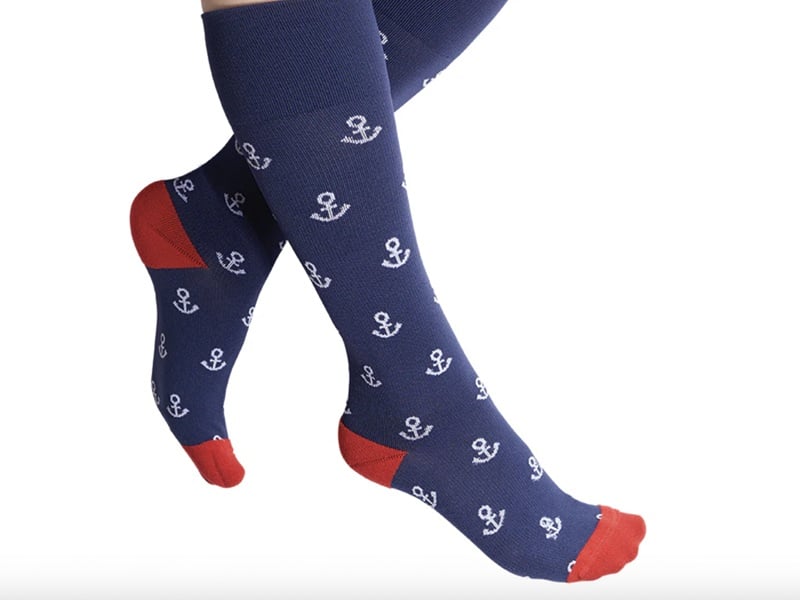
There’s something quietly powerful about a garment that works for you every single day through long shifts, difficult appointments, and the ordinary moments in between. Compression socks are exactly that: essential tools for circulation support, lymphedema management, and post-surgical recovery. But here’s the mistake a lot of people make wearing them long past the point where they’re actually working. When compression socks lose their effectiveness, they feel the same on your feet but deliver far less to your body. At Pretty In Pink Boutique, we’ve walked alongside thousands of women through their journeys, and we know that the right garment properly fitted and timely replaced is one of the most meaningful things you can do for your health. This guide gives you the clear timeline, the warning signs, and the care tips you need to stay truly supported.
What You’ll Find in This Article:
- Why replacing compression socks matters for your health
- How long compression socks typically last
- 5 signs it’s time for a new pair
- What affects compression sock lifespan
- How to care for your compression socks so they last longer
- How many pairs you should own
- Special guidance for lymphedema and post-surgical care
Why Replacing Compression Socks Matters
Compression socks are precision-engineered to apply specific, graduated pressure to your legs. Over time, the elastic fibers that create that pressure break down and when they do, the garment can no longer maintain the mmHg levels your healthcare provider prescribed. The medical effectiveness quietly disappears even while the sock still looks wearable. Clinical guidance consistently identifies compression therapy as a core, ongoing component of lymphedema management essential for maintaining limb volume and preventing progression.
Beyond effectiveness, degraded fabric retains moisture and bacteria more readily, raising real hygiene and skin health concerns — especially for those with sensitive or post-surgical skin. The American Cancer Society highlights that properly fitted compression garments are a clinical necessity for post-surgical recovery, not simply a comfort choice.
At Pretty In Pink Boutique, we see this reality in our fitting room every day: clients who’ve been struggling with returning swelling, only to discover their garments had quietly stopped doing their job. Replacing on time is an act of genuine self-care.
How Long Do Compression Socks Typically Last?
The standard guideline is six months with daily wear. That window depends on how frequently you wear them, the quality of the material, how carefully you care for them, and how many pairs you rotate through. Medical-grade compression socks like the therapeutic styles we carry at Pretty In Pink Boutique are more durable than fashion compression options and hold their therapeutic levels longer. But even the best garments eventually lose effectiveness. Quality is worth investing in, and it works best when paired with timely replacement.
5 Signs It’s Time to Replace Your Compression Socks
Your body and your garments will often tell you when it’s time — you just need to know what to listen for.
- Loss of Elasticity: If your socks feel noticeably looser than when new, or no longer require effort to put on, the elastic fibers have broken down.
- Visible Wear and Tear: Thinning fabric, small holes, or stretched areas around the heel and ankle mean compression is no longer evenly distributed.
- Reduced Compression Support: If your legs feel more fatigued or swollen at day’s end — even with your socks on — trust what your body is telling you.
- Difficulty Staying in Place: Socks that roll down or bunch have lost their structural integrity. Bunching can actually restrict circulation rather than support it.
- Changes in Fit or Comfort: Weight fluctuation, post-surgical changes, or shifting swelling patterns may mean it’s time not just for a replacement pair, but for a fresh professional fitting. Our team at Pretty In Pink Boutique is always here to help you find the right fit again.
Factors That Affect Compression Sock Lifespan
Heat is the biggest culprit dryers are particularly damaging to elastic fibers. Washing too infrequently allows skin oils, sweat, and bacteria to degrade fabric from within. Wearing a single pair daily without rotation puts continuous stress on the same fibers. Higher activity levels also shorten lifespan. Topical products like lotions and sunscreen break down fibers too; rinsing gently after each wear removes residue before it causes lasting damage.
How to Make Your Compression Socks Last Longer
Washing: Each manufacturer has different recommendations, so please refer to the packaging or material with your garments. Typically, we recommend to use a delicate cycle with cool water and mild detergent. Avoid fabric softeners; they weaken the elastic fibers that make compression socks effective. Wash after 1-2 wears.
Drying: Each manufacturer has different recommendations, so please refer to the packaging or material with your garments. Typically it is safe to dry on low or medium heat but not on a radiator or in direct sunlight.
Rotation: Two to four pairs means each gets adequate rest between wears — the single most effective habit for extending garment life.
Storage: A cool, dry drawer away from heat and sunlight is ideal.
How Many Pairs Should You Own?
For daily wearers, three to five pairs is the sweet spot. Active lifestyles — exercise, demanding work, or travel call for more. When clients come to Pretty In Pink Boutique for their fitting, we always help them build a rotation that fits both their health needs and their daily life, because a garment you can always rely on is one that’s always ready.
When to Replace for Medical Conditions
For those managing lymphedema or recovering from breast cancer surgery, replacement isn’t optional, it’s part of your treatment protocol. If you’ve had lymph nodes removed, your compression needs may shift over time, and a garment that fit six months ago may no longer be serving you. For post-surgical care, always follow your provider’s specific guidance on replacement schedules. Our team at Pretty In Pink Boutique is trained to ensure every fitting reflects exactly where your body is today — because your healing deserves nothing less.
Choosing Compression Socks That Last
Look for medical-grade compression ratings, durable fabrics, and trusted brands with a therapeutic track record. Style matters too, garments you feel good in are garments you’ll wear consistently. At Pretty In Pink Boutique, every option we carry is as thoughtfully designed as it is clinically effective. Replace every three to six months, wash gently, rotate faithfully — because you’ve worked too hard on your health to settle for support that’s less than you need.
Ready for a Refresh?
Explore our compression garment options at Pretty In Pink Boutique — fitted with care, chosen for comfort and confidence. Request an appointment with our team in Franklin, Tennessee today.
Email: info@prettyinpinkboutique.com
FAQ
How often should you replace compression socks?
Every six months, depending on how often they’re worn and how well they’re cared for.
How do I know if my compression socks are worn out?
Look for lost elasticity, slipping, visible wear, or increased swelling and fatigue at day’s end.
Can compression socks lose their effectiveness over time?
Yes, elastic fibers break down with use and washing, reducing their ability to provide proper compression.
Is it okay to wear compression socks every day?
Yes, and having multiple pairs to rotate helps extend their lifespan.
How many pairs of compression socks do I need?
At least three to five pairs for a healthy rotation throughout the week.
Do medical-grade compression socks last longer?
They’re more durable but still need replacement every few months to maintain compression levels.
Can I extend the life of my compression socks?
Yes, gentle washing and rotating pairs all help significantly.